


Key Takeaways:
- THC binds to the same receptors over-and-over — after a while, they stop responding as strongly. A break gives them room to bounce back.
- Even 2–3 days off starts the reset; most daily users see real changes somewhere between two and four weeks.
- Cutting back gradually usually goes smoother than stopping all at once (particularly for daily users).
Cannabis has been part of your routine for a while now. Months, maybe longer. And somewhere along the way, the effects started feeling… dimmer. You're using more to get less, watching your stash disappear faster than it used to. Nothing's wrong with the products themselves — your system just caught on.
That's what a tolerance break fixes. Most people sleep on this one, but it's the smartest move available to regular users, and it's free. Here's how to do it right.
What's a Tolerance Break, Anyway?
People call it a T-break sometimes. Simple concept: you stop using cannabis on purpose, for a set period. Why? Your endocannabinoid system (the thing THC plugs into) needs a breather. Keep feeding it THC and eventually those CB1 receptors turn down the volume. They don't disappear. They just get lazy. Stepping away lets them wake back up.
There's actual science behind this. Researchers looking at long-term cannabis users found that receptor levels can bounce back to normal after a few weeks off. How fast depends on the person, but the underlying process works the same for pretty much everyone.
And look, it's not some punishment or test of discipline. Picture it like rebooting a laptop that's been running nonstop for months.
Why Take a T-Break?

The common reasons people take one:
- Effects fading: That cartridge that used to last you two weeks is gone in five days. Sound familiar? Tolerance creep.
- Wallet-pressure: Spending more, feeling less. The economics stop making sense after a while.
- Drug screening: New job, workplace; random metabolites stick around. Sometimes you just have to clear out.
- Quarterly maintenance: Some users build breaks into their routine, every couple months, just to keep their baseline where they want it.
- Weird shifts: Sleep off, anxiety creeping in, appetite all over the place. Pausing helps you figure out what's actually causing what.
No magic formula for timing exists. If you're using daily, every month or two might make sense. Lighter users might never feel the need. Pay attention to what your body tells you — usually it's pretty obvious when a reset would help.
How Long To Take a Tolerance Break?
It varies by how heavy your use is, but the research and the counter experience agree on a rough timeline:
- 2–3 days: partial receptor recovery begins. Casual users often feel a real difference already.
- 1–2 weeks: the range where most moderate users notice their old dose working again.
- 3–4 weeks: the full reset. Studies on daily consumers point to two to four weeks for receptors to substantially recover. Some people push to a full month, but you hit diminishing returns at some point.
The first few days are the roughest. Get past that hump and things smooth out fast.
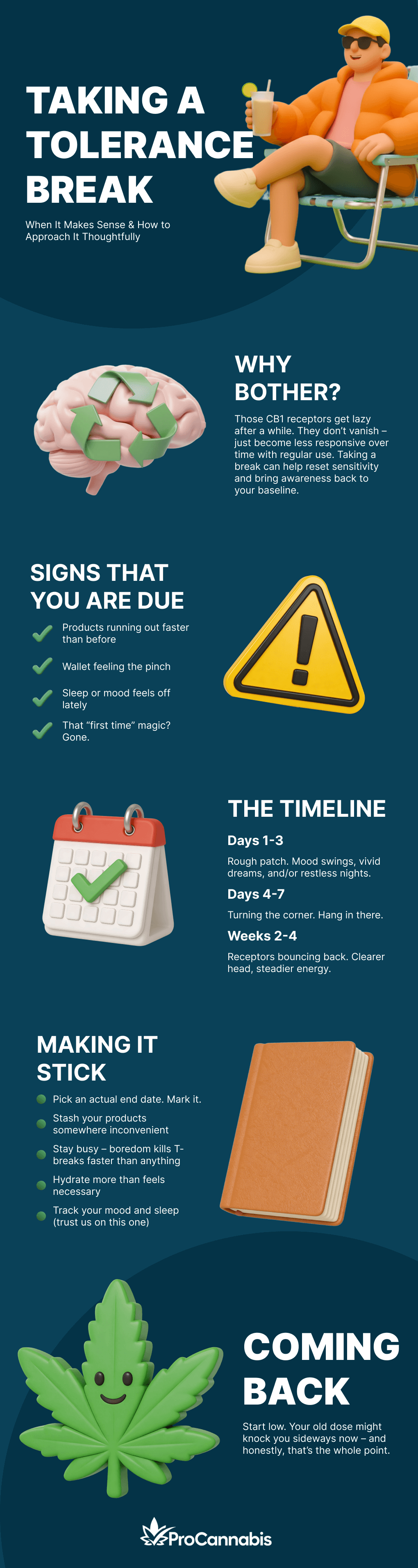
A Tolerance Break Guide That Actually Works
Thinking about trying this? Some ways to stack the deck in your favor:
Commit to an actual number of days
A week, two weeks — whatever feels doable for you. "I'll just ease up" almost never pans out. Mark it on your calendar. Set a phone reminder. Make it concrete.
Think about tapering
Stopping cold works for some people. But if you've been using every day, stepping your dose down for a few days first tends to make the transition less bumpy — drop to low dose products or even microdose territory on the way out. Our edible dosage chart maps the rungs if you want to taper deliberately instead of guessing.
Put your products somewhere inconvenient
Leave them at a buddy's place, toss them in a lockbox — whatever creates distance between you and temptation.
Keep yourself occupied
Boredom tanks tolerance breaks faster than anything else. Stack up things to do ahead of time: movement helps (walks, gym sessions, even just stretching), catch up on that show everyone's been talking about, make plans with people — preferably stuff that doesn't revolve around smoking.
One myth worth clearing up while we're here: exercise doesn't "burn the THC out" of your system. It's fat-soluble and does sit in adipose tissue, but when researchers tested this directly, a 45-minute workout produced only a small, temporary bump in blood THC that was gone within two hours — urine levels barely moved. What exercise does do is take the edge off the anxiety, restlessness, and rough sleep of week one, and that's reason enough to move every day of the break.
Don't underestimate hydration and rest
Your system's doing a lot of recalibrating right now. Drink water. Sleep's probably gonna be rough the first few nights — melatonin or some CBD (the kind without THC) can smooth that over.
Our guide to sleep gummies covers the THC-free options built for exactly those nights.
Keep a log of what's happening
Track your mood, how you slept, appetite, cravings. This info becomes useful for figuring out how long your breaks should be in the future.
The First Week: What Actually Happens
Being honest here: days one through five aren't exactly pleasant. Pretty standard stuff people run into:
- Mood swinging all over the place
- Dreams that feel weirdly intense or vivid
- Appetite dropping off
- Restless nights, tossing around
- That antsy, can't-sit-still energy
Days two and three tend to be the most difficult. After week one it gets easier, and by week two most people start to see real results.
What Actually Helps You Stick With It
- Tell somebody: Let a friend know what you're up to. Weird how much having someone to check in with changes the equation.
- Skip the substitutes: Trading cannabis for alcohol or whatever else defeats the whole point — and doesn't work.
- Mark the milestones: Hit day seven? Treat yourself (not with cannabis, obviously).
Coming Back: One Rung Lower
You did the break. Now the part people get wrong: don't return at your old dose. Your receptors reset — that was the whole point — so your old amount is now too much. Come back one or two rungs below where you left off and climb only if you need to; our dosage chart lays out exactly what each level does if you want to re-enter deliberately. Products will hit harder, flavors pop more, and you'll need a fraction of what you used to. That sensitivity is the payoff — protect it by keeping doses low for the first couple weeks back.
Pro Cannabis stocks lab-tested THC and CBD products across every dose level — browse what we've got or check the blog for more guides like this one. Your receptors did the work. Now enjoy the payoff.
FAQ
How long should a tolerance break be?
Casual users: 2–3 days often makes a noticeable difference. Moderate users: 1–2 weeks. Daily users: 3–4 weeks for a substantial receptor reset, per the research. Longer than a month adds little for most people.
Do 2-day tolerance breaks work?
Partially. Receptor recovery starts within days, so a weekend off genuinely helps light users. Daily consumers need more like two to four weeks for a reset they'll actually feel.
Does exercise speed up a tolerance break?
Not meaningfully. Testing showed a 45-minute workout causes only a small, short-lived rise in blood THC and barely changes urine levels. Exercise won't clear THC faster — but it's one of the best tools for the anxiety, irritability, and poor sleep of the first week.
What should I expect the first week?
Days 2–3 are usually the hardest: restless sleep, vivid dreams, reduced appetite, irritability. Most of it fades noticeably after the first week. Hydration, exercise, and keeping busy carry you through the hump.
How should I dose after a tolerance break?
Lower than you think. Come back at one or two levels below your pre-break dose — a reset means your old amount is now an overshoot. Start small, wait the full onset window, and climb only if needed.