

By ProCannabis Editorial Team — Updated May 2026
When it comes to Delta 9 disposable vapes, most shoppers are surprised by how few of them say "Delta 9" prominently on the front. Walk through almost any hemp-derived vape page online and you'll see THCA blends, THC-P blends, and multi-cannabinoid formulas all sitting under the same Delta 9 heading. That isn't a mislabel. It's how the hemp-derived vape category actually works once you understand how the 2018 Farm Bill defines hemp and how these cannabinoids behave when heated.
The short version is this: a few different cannabinoids end up producing a Delta 9 experience by the time the vapor reaches your lungs, so the products are grouped accordingly. The longer version — what's actually in the cart, how the effects play out, and what separates a legitimate product from a sketchy one — is worth understanding before buying.
A Quick Snapshot of What's Actually Inside
Delta 9 THC is the cannabinoid most people associate with feeling high, and under the 2018 Farm Bill, hemp products are legal federally when they contain less than 0.3% Delta 9 by dry weight. That percentage is measured before any heat enters the picture.
THCA, the non-psychoactive precursor that sits in raw cannabis, doesn't count against the 0.3% cap. But the moment a vape coil warms up, THCA decarboxylates into Delta 9. Same molecule, same receptor binding, just a different starting point on the label. That's why a Delta 9 vape page can hold products marketed as THCA, THC-P, Delta 8, or a blend of all three — different formulations, similar endpoint by the time you exhale.
THC-P is worth knowing about separately. It's a distinct cannabinoid found in trace amounts in cannabis, with a longer molecular structure than Delta 9 that makes it bind to CB1 receptors more aggressively. Products that pair Delta 9 or THCA with THC-P tend to feel stronger than the milligram math alone would suggest, which is why most "high-potency" disposables on the market include it.
How the Effects Tend to Play Out
Most shoppers describe hemp-derived Delta 9 vape effects as quick to arrive and shorter-lived than edibles. Onset is commonly reported within a few minutes, with the most intense part of the experience landing in the first 15 to 45 minutes. Effects usually taper within two to three hours, though heavier users often report a shorter window.
| Stage | Timing | What Many Users Report |
|---|---|---|
| Onset | 1–5 minutes | Initial wave of effects, body relaxation |
| Peak | 15–45 minutes | Strongest effects, mood lift, altered perception |
| Plateau | 45 min – 2 hours | Steady experience, gradually softening |
| Comedown | 2–3 hours | Effects fade, mild fatigue or appetite common |
Compared to an edible — which can take an hour to come on and last most of an evening — a vape gives shoppers more control over duration. That said, every product affects people differently. A 1-gram disposable with a single cannabinoid feels nothing like a 5-gram device blending Delta 9 with THC-P and live rosin terpenes. Tolerance, draw size, and the specific blend all shape how a session plays out.
How Much to Start With
There's no single right answer when it comes to dosing inhaled cannabinoids, but a few patterns are pretty consistent across users. People newer to inhaled THC often feel things from 2 to 5 milligrams of total active cannabinoid per session. Shoppers with some tolerance tend to land in the 5 to 10 milligram range. Experienced users sometimes go well above that.
Practically speaking, a typical 1-gram disposable holds 800 to 1,000 milligrams of total cannabinoids, and one average draw delivers roughly 3 to 5 milligrams of extract. That's why many users start with one or two short pulls and wait 15 minutes before deciding whether to take more. The onset is fast but not instant, and the gap between a comfortable session and an uncomfortable one is often just one extra puff.
If the blend has THC-P in it, the case for going slow is even stronger. THC-P binds CB1 receptors more aggressively than Delta 9, so the same milligram dose tends to feel noticeably more intense.
Buying Delta 9 Vapes Online
Hemp-derived Delta 9 vapes are widely available online under the 2018 Farm Bill, but state law is doing most of the actual regulatory work in this category. A growing number of states have restricted or banned hemp-derived intoxicating cannabinoids, and a few apply their "total THC" definition in ways that include THCA after conversion. The USDA hemp testing guidelines and individual state agriculture departments are the most current sources here.
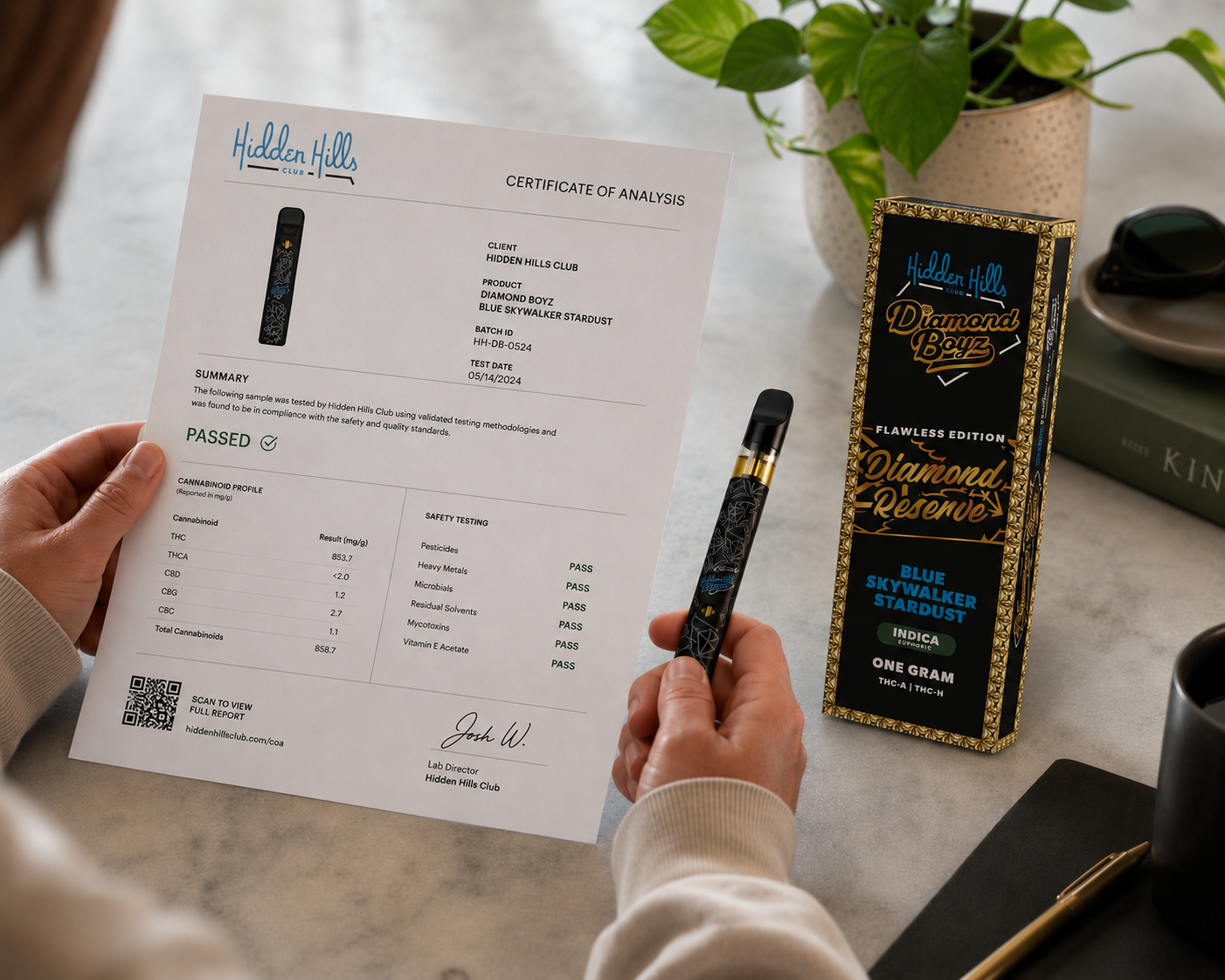
Beyond the legal question, a few things separate a legitimate retailer from one that's worth skipping. A current Certificate of Analysis (COA) should be available for every product, with the full cannabinoid breakdown, residual solvents, heavy metals, and pesticide screens all on one document. Product pages should list actual milligram amounts rather than vague potency claims. Shipping policies, return terms, and packaging practices should be clearly stated.
Sellers who can't produce a lab report, or whose product pages stay vague on cannabinoid content, aren't worth the risk in this category. The marketing language on a label matters considerably less than the compliance data behind it.
What "Strongest" Actually Means
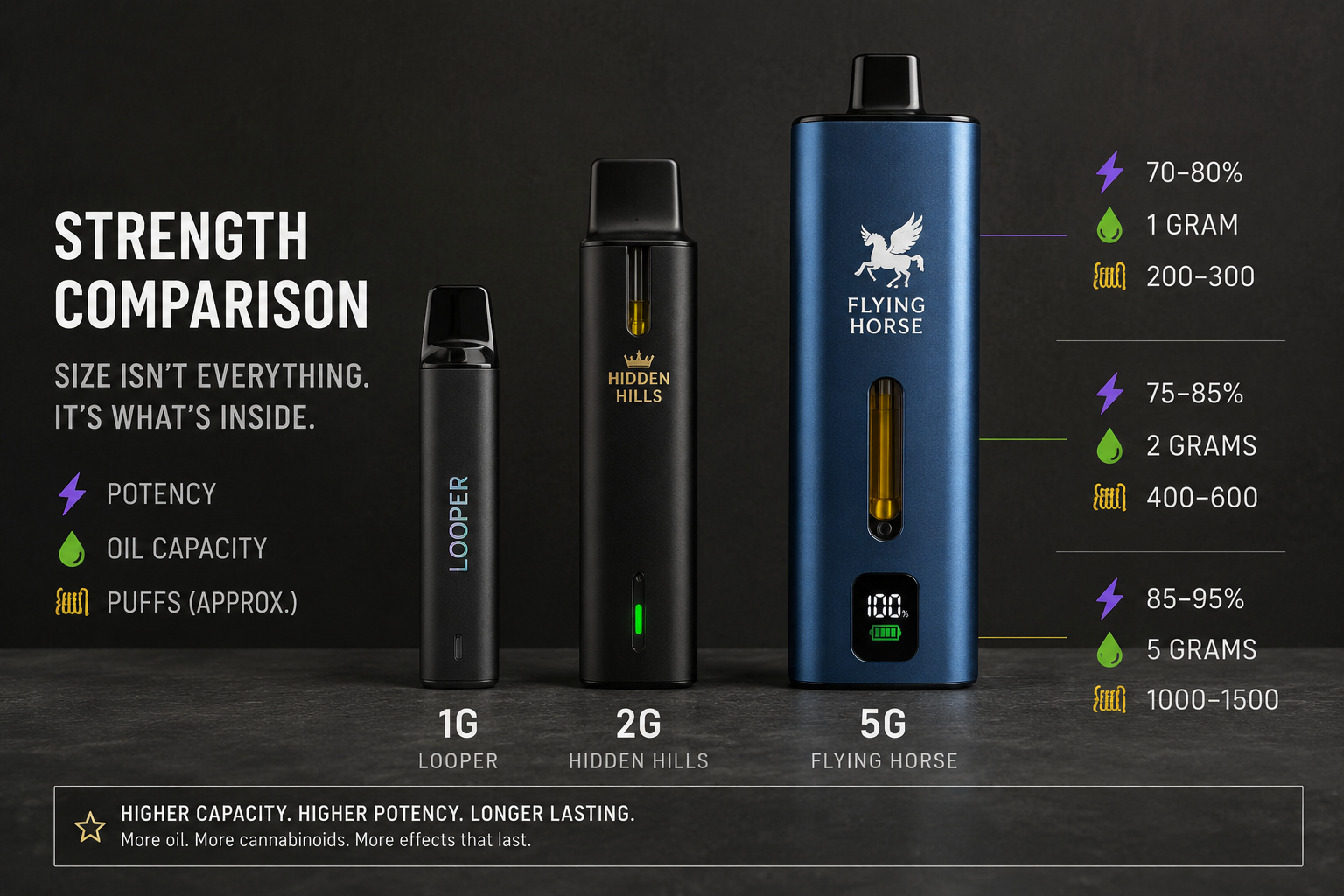
"Strongest" gets used a lot in vape marketing, and it can mean a few different things depending on what the brand wants you to focus on:
- Highest cannabinoid percentage in the oil. Some hemp-derived disposables hit 90% or higher total active cannabinoids, with very little carrier oil.
- Largest total load per device. A 5-gram or 6-gram disposable contains more material than a 1-gram cart, even at similar potency percentages.
- Most aggressive blend. This usually means Delta 9 or THCA paired with THC-P, often with live rosin or live resin terpenes for added effect.
The third version is what most people are picturing when they ask which Delta 9 vape is the strongest. A few brands come up consistently in this conversation:
Hidden Hills
Hidden Hills is widely known for high-potency disposables built around multi-cannabinoid blends that combine Delta 9, THCA, and THC-P. The formulations tend to feel stronger than single-cannabinoid carts at similar milligram counts.
Looper
Looper builds many of its disposables around live resin and live rosin terpene profiles paired with high-percentage extracts, which shoppers often report as both stronger and more flavorful than standard distillate carts.
Flying Horse
Flying Horse carries 2-in-1 disposables that combine THC-P with other intoxicating cannabinoids, often with both an indica and sativa strain available in a single device.
TURN and Muha Meds
TURN and Muha Meds round out the high-potency category with disposables built on live resin and high-percentage THCA extracts.
That said, "strongest" on a label is just a word at the end of the day. The COA is what tells you what's actually in the cart.
How to Choose a Delta 9 Vape That's Right for You
A simple framework based on what shoppers in different experience levels tend to gravitate toward:
- Newer to inhaled THC: A 1-gram disposable with a single cannabinoid (Delta 9, THCA, or a mild Delta 9 + Delta 8 blend) tends to be the most forgiving starting point.
- Moderate tolerance: A 1- or 2-gram blend with Delta 9, THCA, and live resin terpenes offers a balance of potency and flavor.
- Higher tolerance: A 2-gram or larger disposable with THC-P added to the blend, often with live rosin extracts.
- Flavor-focused: Live rosin or live resin carts trade some potency for a richer terpene profile.
ProCannabis carries lab-tested hemp-derived Delta 9 disposables from each of these brands, with COAs available for every product on the page.
Frequently Asked Questions
Do hemp-derived Delta 9 vape pens get you high? +
Most consumers report that they do. The active cannabinoid reaching your bloodstream is the same Delta 9 found in traditional cannabis — what changes is the source plant, the legal framework, and sometimes the supporting cannabinoids in the blend. Personal tolerance and the specific formulation matter as much as the cannabinoid name on the front.
How long does a Delta 9 vape high last? +
Most users feel effects within a few minutes, peak around 15 to 45 minutes in, and come back down within two to three hours total. Tolerance shortens this curve. Blends with THC-P may produce slightly longer-feeling effects because of how aggressively THC-P binds to CB1 receptors.
Why are most Delta 9 vapes labeled as THCA? +
Because the 2018 Farm Bill measures Delta 9 by dry weight before any heat is applied. THCA stays under the Delta 9 cap in raw form, then converts to Delta 9 when heated by the vape coil. The cannabinoid you inhale is functionally Delta 9 either way — the label difference is a legal and manufacturing distinction.
Can I buy Delta 9 vapes online legally? +
In most states, yes, under the 2018 Farm Bill — though a growing number of states have restricted hemp-derived intoxicating cannabinoids. Check your state's current rules before ordering, since enforcement and definitions vary considerably from one state to the next.
Which Delta 9 vape is the strongest? +
The most intense disposables on the market combine Delta 9 or THCA with THC-P and use 2-gram or larger device formats. Brands like Hidden Hills, Looper, and Flying Horse are commonly mentioned in this category. The COA is the only document that confirms what's actually in the cart — "strongest" on a label is just marketing language.
Will a Delta 9 vape show up on a drug test? +
Yes. Hemp-derived Delta 9 produces the same THC metabolites as marijuana-derived Delta 9, and standard tests can't distinguish between them. The "hemp-derived" label changes the legal status of the product, not the lab result. If you are subject to drug testing of any kind, this category is not the loophole some marketing makes it sound like.